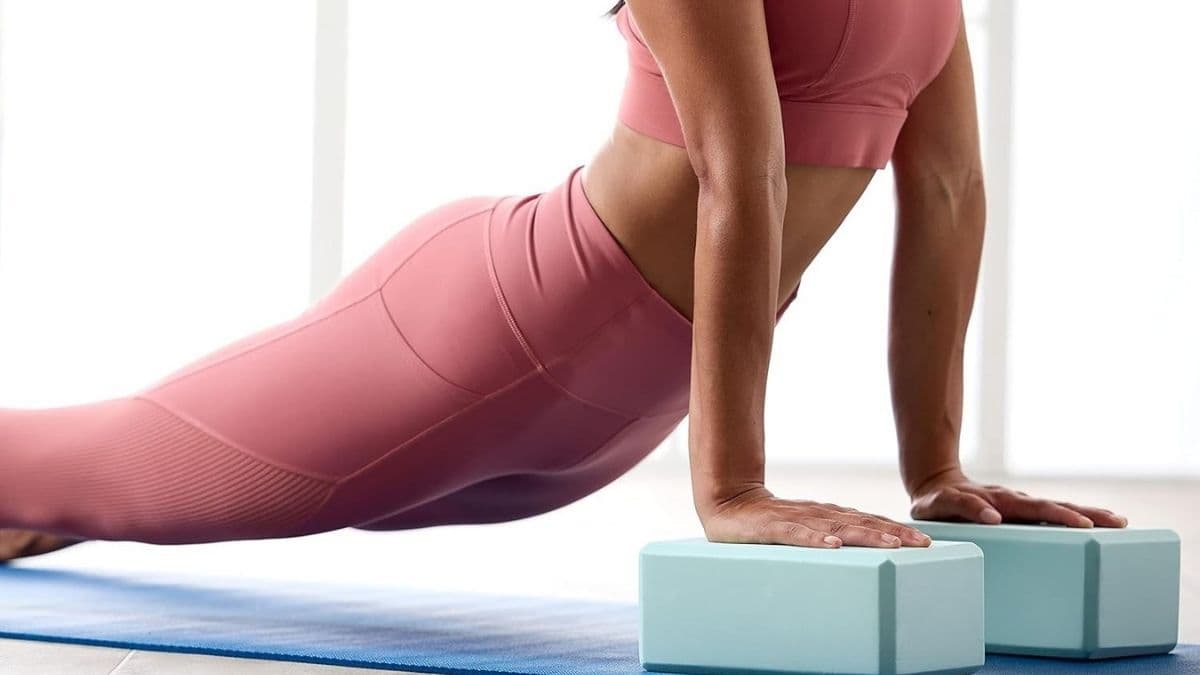
The Gaiam Yoga Block is a simple tool, but it can make a noticeable difference in daily sessions. It adds height, support, and control to poses that may feel difficult at first. For beginners, it helps reduce strain. For regular practitioners, it supports better form and deeper stretches.
What the Gaiam Yoga Block is made of
The block uses latex-free, high-density EVA foam. This material offers a balance between softness and structure. It feels more supportive than basic foam options while still staying comfortable against the body.
Its size measures about 9 x 6 x 4 inches. The weight ranges from 4.6 to 6.7 ounces, making it easy to carry in a gym or yoga bag. This makes it practical for both home and studio use.
Why the design works well in practice
Small design choices improve usability. The beveled edges reduce pressure during contact with the body. This makes poses like seated stretches or supported back work more comfortable.
The textured, non-slip surface improves grip. Even during sweaty sessions, hands and feet stay more secure. This helps maintain balance without constant adjustments.
How it performs during yoga and stretching
In actual use, the block provides stable support for alignment and balance. It works well in standing poses, seated stretches, and gentle back support positions. The higher-density foam keeps it from feeling too soft.
It also helps extend reach safely. Instead of forcing flexibility, the block allows gradual progress. This makes it especially useful for beginners and those working on mobility.
Where it fits beyond yoga
This block works across different routines, not just yoga. It can support:
- Pilates exercises
- Stretching and mobility sessions
- Meditation posture support
- Light home workouts
This versatility adds practical value beyond a single use case.
What to expect from long-term durability
For regular practice, the block performs reliably. It holds its shape well and remains comfortable over time. The lightweight design also makes it easy to use consistently.
However, heavy pressure from advanced poses may cause dents. Over time, this can affect firmness. Users who focus on intense weight-bearing poses may prefer cork or wood alternatives.
How it compares with other yoga blocks
Compared with basic foam blocks, this one offers better density and durability. It feels more stable and lasts longer with regular use.
Compared with cork, it is softer and more comfortable but less firm. Compared with wood, it is lighter and easier to handle, though not as rigid. For most users, the balance of comfort and support works well.
A practical option for everyday sessions
The Gaiam Yoga Block suits users who want a reliable and comfortable support tool. It is easy to carry, simple to use, and flexible across different routines. While it may not replace firmer materials for advanced training, it delivers solid everyday performance.